


Unfinished Business: Following Edinburgh students’ anti-apartheid tradition toward divestment

Written by Gina Paxton Goodfellow in conversation with the Edinburgh University Justice for Palestine Society

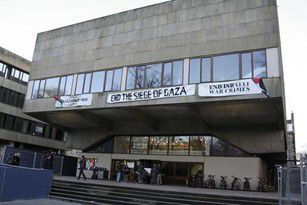
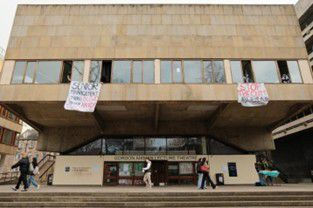
Writing as a group of students from the Edinburgh University Justice for Palestine Society (EUJPS) occupy the Gordon Aikman Lecture Theatre, it is clearer than ever that the battle for the University of Edinburgh to divest from companies entangled with Israel is one that shall be fought to its end. Since the violent acceleration of the genocide in Gaza in October 2023, this student campaign has been fought with increased urgency. It has involved countless protests, pickets, student occupations, mass walkouts from graduation ceremonies, and, famously, a month-long encampment and student hunger strike. Edinburgh students have been unwaveringly committed to dismantling Zionism on campus.
This struggle is merely the latest chapter in the long story of the University’s legacy of racist collaborations and student dissent. Comparison between this struggle and the student movement for divestment from South African apartheid affirms what student activists have reiterated over the past two and a half years: divestment is inevitable, and it will only be achieved through pressure.
1. The Past

The story of the University’s anti-apartheid movement in the early 1970s brings together the successes of student activism, the moral failures of the University Court, and former Prime Minister Gordon Brown (then an Edinburgh student). It emerges in the University’s recent review of race and history, Decolonised Transformations, which exposed the University’s historic role in colonial and racial atrocities. While Appendix 3 documents the campaign for divestment from Israel, it also reveals that the South Africa divestment movement is strikingly similar to this ongoing struggle.
The student campaign against South African apartheid picked up in January 1970 when Edinburgh students picketed Old College in protest of a recruitment event hosted by Barclays, a key investor in apartheid South Africa. The picket eventually evolved into a week-long occupation. In an extremely similar action, October 2024 saw EUJPS occupy the Sanderson Building in protest of the University’s decision to host the companies Siemens, Honeywell, JCB, and GE Aerospace at the Engineering Careers Fair. All four companies provide essential material support to Israel. In the end, they all pulled out of the event. EUJPS has also formed pickets and blockades of Old College (in June 2024, November 2025, and April 2025) and the finance building (in October 2024, February 2025, and March 2025) – the buildings were closed for the day in every instance.
Despite student protests in 1970, the University, especially previous Vice-chancellor Micheal Swann, continued to deny that its investments were tied to South Africa. However, in a December 1970 watershed moment, The Student published research revealing that the University had extensive investments tied to apartheid totalling over £522,850 (£7.5m in today's money). Likewise, EUJPS’ Call to Divest provided a comprehensive analysis of the University’s investments and their links to Israeli military infrastructure. The current Vice-chancellor and Principal Peter Mathieson, much like Michael Swann, has not acknowledged the significance of these investments.
Swann was widely criticised by staff and lobbied by the Edinburgh Anti-Apartheid Society for his failure to end University complicity in apartheid. In December 1970, 700 students marched in Old College calling for his resignation, while a petition calling for the immediate liquidation of the investments was signed by 2,500 students. Once again, this mirrors the ongoing divestment campaign; in October 2023, in the earliest phases of the genocide, a petition circulated by EUJPS received 2,300 signatures. In June 2024, another petition for divestment had over 3,000 signatories, along with a staff petition signed by 618 staff members and 13 networks. Hundreds of students and staff attend every rally called by EUJPS.


After the petition, occupation, picket, and several rallies, it was announced in January 1971 that the University would sell all £522,850 of the investments – a decision that was clearly motivated by the pressure of student campaigning. This significant act of divestment was not, however, the end of the University’s failure to accord with international demands for the isolation of apartheid South Africa.
In August 1973, the Association of Commonwealth Universities (ACU) was set to have a conference hosted by Edinburgh University. South Africa was, controversially, set to send a delegation. On multiple occasions over the course of the 1972-3 academic year, student Rector Gordon Brown argued that South Africa should not be allowed to send delegations. The University Court repeatedly voted against his proposals. The language of the Court in a press release in January 1973 is strongly reminiscent of the University’s language today. In a statement called “disingenuous” by Brown, the Court revealed that it would not act to prevent the representation of an apartheid state on campus but sanctimoniously reminded the reader that it condemned “racial discrimination.” In communications with and statements regarding EUJPS, the University often repeats the same tired refrain – they are “troubled” and “upset” by the “violence in Israel and Palestine” and they hope for “peace”. The University cleverly avoids addressing the actual reason for student protests (University complicity) or saying anything of any substance about the dynamics that underpin this nebulous “violence” (genocide, settler colonialism, and apartheid).
While Vice-chancellor Michael Swann repeatedly insisted on the involvement of South Africa, it ultimately did not attend - not because of the goodwill of the University Court or administration but because of external pressure applied by students and international bodies.
2. The Present
Half a century has passed since this campaign, but the University’s commitment to hosting apartheid actors on campus has remained consistent. In August 2024, Peter Mathieson invited Daniella Grudsky, the Israeli ambassador to the UK, to meet with him in Old College. Her presence on campus closely followed the University’s removal of EUJPS’ Old College memorial for Gaza’s martyrs, which Mathieson refused to visit. The removal of the memorial conveniently spared Grudsky seeing the Palestinian children killed by Israel, which, EUJPS discovered, the University had binned. Regrettably, Edinburgh students were not aware of her invitation until after the meeting – perhaps with this foreknowledge, they would have been able to prevent the presence of apartheid actors at our university like in 1973.
Financially, the University of Edinburgh’s entanglement with apartheid has intensified since 1970. The University invests a total of over £17m across three companies (Amazon, Alphabet, and Microsoft) that each contribute vast amounts of technology to Israel and its military. Amazon and Alphabet are famously joined in Project Nimbus, a $1.2bn project that provides technological support and AI to the Israeli military – technology used in the genocidal targeting of civilians. Microsoft has a similar and equally enormous deal with the Israeli Occupation Forces (IOF). The IOF has become increasingly dependent on these companies, with an Israeli unit leader comparing them to weapons manufacturers. This is reinforced by the University’s £57.8m holding in BlackRock, which itself invests billions in arms manufacturers like Lockheed Martin. The combined total of over £75m is ten times larger than the inflation-adjusted sum of £7.5m that forced change in 1970. These investments render the University complicit in the genocidal military ventures of the IOF: we all have a moral obligation to disrupt this network of financial complicity.
The University’s complicity has also been spotlighted on the international stage. It was the only British university to be named in UN Special Rapporteur Francesca Albanese’s From Economy of Occupation to Economy of Genocide, where she gives it the shameful distinction of being one of “the UK’s most financially entangled” institutions to Israel’s genocide in Gaza. The Race Report further emphasised the international political significance of the investments.
Aside from ending the University’s immediate financial complicity, divestment would be a notable step in the international Boycott, Divestment, and Sanctions (BDS) campaign. The movement was inspired by the struggle against South African apartheid, and encouraged the world to apply divestment initiatives similar to those applied to apartheid South Africa. The movement threatens to isolate Israel and see it become a pariah state – a cultural shift that is already evolving. Recent polling data suggested that a majority of 18–24-year-olds in the UK believe that Israel “should not exist”. Locally, the Scottish Green Party recently passed a motion in the Scottish Parliament backing the adoption of a Scotland-wide BDS policy. The economic and cultural isolation created by BDS would make Israel’s occupation and ethnic cleansing of Palestinians untenable. This, in turn, poses an existential threat to Israel, which is predicated on the occupation and ethnic cleansing of Palestinians.
The historical facts of the University’s divestment from South African apartheid establish one practical reality above all others: the University will not divest because it is the right thing to do. It will only divest when it is forced — when every other option becomes impossible. Over the past two years, EUJPS has exhausted every existing bureaucratic pathway to achieve divestment; the only remaining option is constant, unified pressure. The events of 1970-73 have proven that pressure works, but this is not the only case. In 2009, a group of students occupied the Gordon Aikman Lecture Theatre in protest of the University’s complicity in Israel’s siege on Gaza – by the end of the occupation, they had secured the end of the University selling Israeli bottled water and scholarships for Gazan students. History proves that students have the power in their hands to force the University to divest.
Without tying the ongoing divestment campaign to that of our predecessors, ‘divestment’ risks becoming intangible. We begin to lose sight of what it could mean, and that it is even possible. By viewing divestment as a continuation of a successful movement, we keep in mind its wider political salience and its potential to form part of a domino effect, led by Palestinians and their resistance, that culminates in the end of the Israeli apartheid regime. If nothing else, placing this movement in the wider tradition of anti-apartheid divestment campaigning is an enormous morale boost. We aren’t in uncharted territory — this has been done before, and it succeeded.
Divestment itself is not liberation. When it comes, we might feel a brief, selfish comfort in the realisation that a significant part of our own complicity has finally ceased. Yet we must remember that liberation will come from Palestine itself, not from actors in the West. After divestment, we will continue the struggle and our solidarity with Palestinians until Gaza’s children can breathe in peace, until the end of apartheid, until complete liberation, until Palestinians are finally free to return to their homeland from the river to the sea. As Mandela reminded us, “it always seems impossible until it’s done.”

Comments